

Oracy
Oracy at St Barnabas Primary School
At St Barnabas, we believe that every child deserves to find and use their voice. We are committed to developing confident, articulate learners who can communicate effectively, think deeply and engage meaningfully with others.
Oracy sits at the heart of our curriculum. It enables children to express their ideas, thoughts and feelings clearly, deepens understanding across all subjects and supports success in reading and writing. Through a strong focus on spoken language, we ensure that all pupils, regardless of their starting point, can achieve, flourish and feel a true sense of belonging within our school community.
Rooted in our values of love, aspiration and belonging, we aim for all pupils to develop the confidence, vocabulary and skills needed to communicate successfully both in school and beyond.
How we develop oracy
Oracy is taught explicitly and embedded across all areas of learning. High quality talk is a consistent feature of daily teaching, with carefully planned opportunities for discussion, reasoning and presentation.
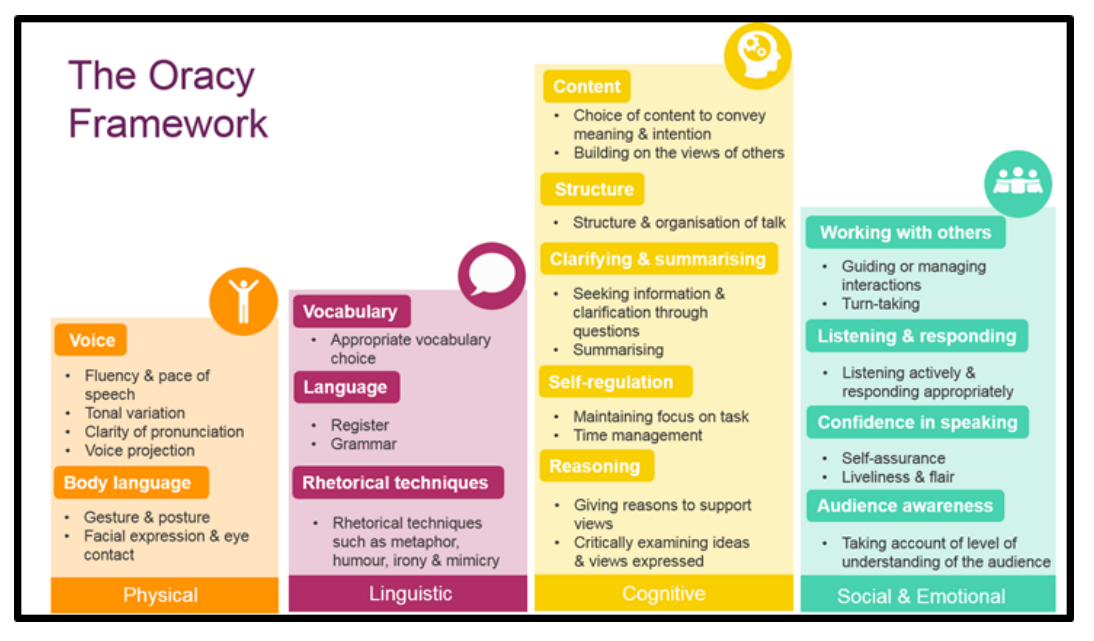
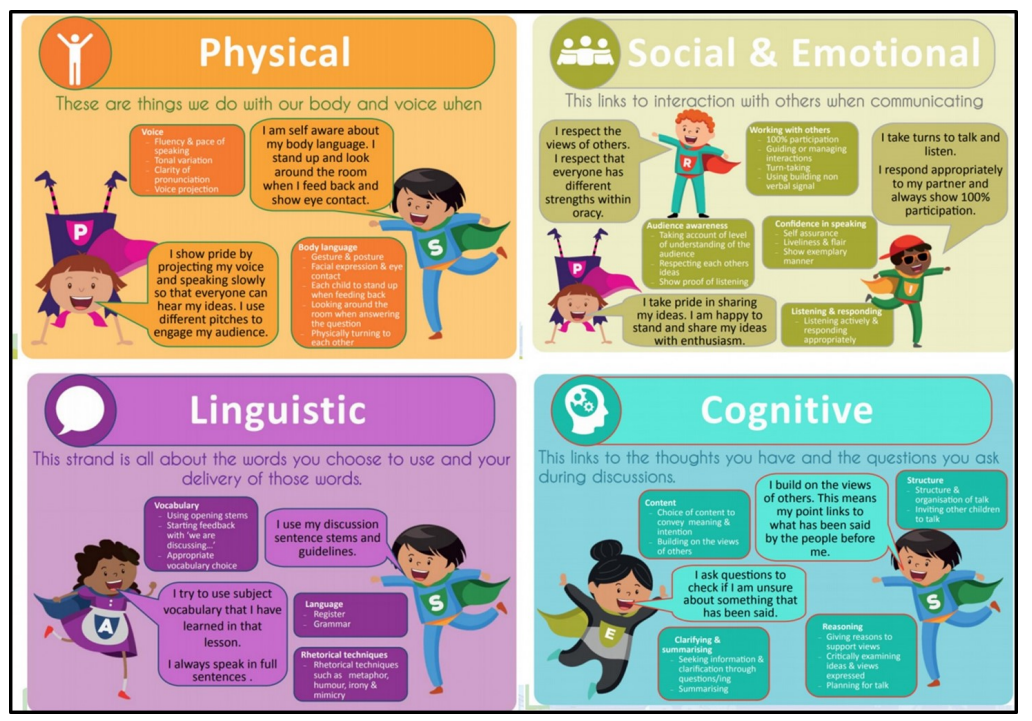
We use the Oracy Framework developed by the University of Cambridge and Voice 21 to support progression. This identifies four key strands of effective communication:
-
Physical
-
Cognitive
-
Linguistic
-
Social and Emotional
This shared approach helps pupils understand what effective communication looks like and supports a consistent language across the school.
Children take part in a wide range of speaking and listening activities, including partner talk, group discussion, exploratory talk and more formal presentation. Teachers model high quality language and use purposeful questioning to deepen thinking.
We support pupils to communicate clearly through:
-
sentence stems and structured talk opportunities
-
clear expectations for discussion within each class
-
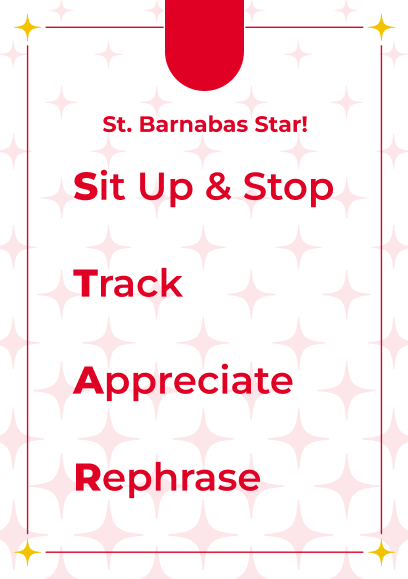
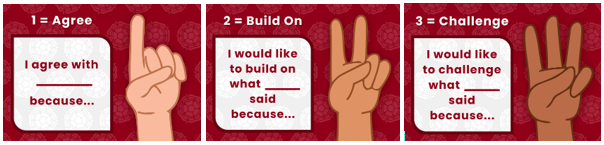
consistent approaches such as St Barnabas STAR and 1, 2, 3 fingers
Early language development is a priority. We use Wellcomm, Time to Talk and NELI to support pupils who need additional help with communication and language.
Inclusion is central to our approach. All pupils are supported to take part fully in spoken language activities. Where needed, staff provide appropriate scaffolding and some children access additional support through speech and language programmes.
The impact of our approach
Pupils at St Barnabas develop into confident communicators who are able to express their ideas clearly and listen respectfully to others.
They use an increasingly rich vocabulary, engage thoughtfully in discussion and are able to explain their thinking across the curriculum. This supports strong understanding and helps pupils to make good progress from their starting points.
Through oracy, pupils also develop independence, resilience and self belief. They are able to reflect on their learning, articulate their ideas and contribute positively to the life of the school.
Most importantly, our pupils feel heard, valued and confident to share their voice, reflecting our commitment to love, aspiration and belonging.
What you will see in our classrooms
-
Pupils speaking in full sentences and using ambitious vocabulary
-
Purposeful talk built into all lessons, not just English
-
Children listening carefully and responding thoughtfully to others
-
Clear structures for discussion, supporting all pupils to participate
-
Teachers modelling high quality language and questioning
-
Classrooms rich in talk, where every child has a voice
-
Pupils able to explain their thinking and talk about their learning
-
Support in place to ensure all learners, including those with additional needs, can fully participate
Supporting oracy at home
Parents and carers play an important role in developing children’s communication skills. You can support your child by:
-
Talking regularly together about their day and experiences
-
Encouraging them to speak in full sentences
-
Introducing and modelling new vocabulary
-
Discussing topics that interest them
-
Sharing stories, poems and songs
-
Encouraging participation in activities such as drama, music or clubs
“Reading and writing float on a sea of talk.”
James Britton (1983)
Here is our oracy progression: